Cryogenic Insulation
Right first time, far below zero
Cryogenic Insulation
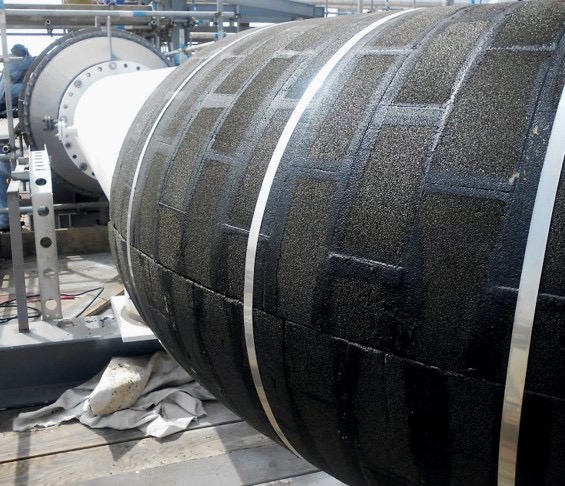
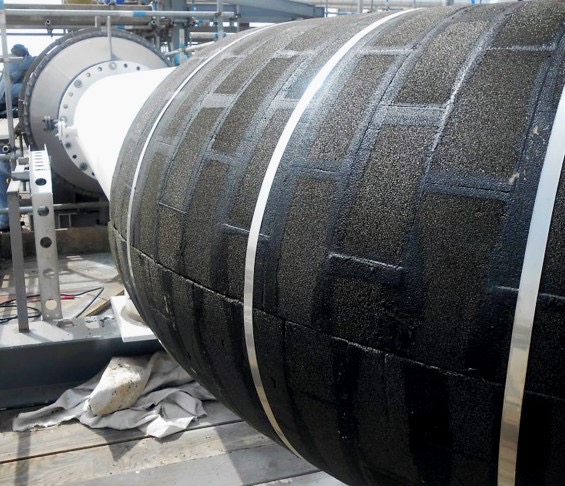
Cryogenic insulation handles the extreme cold end of the temperature spectrum — systems operating below -100°C where conventional insulation materials and methods cannot perform. Fenix installs cryogenic insulation systems on industrial plant and pipework down to -170°C, working to BS EN ISO 12241 and the relevant cryogenic application standards. Applications include LNG storage and transfer, industrial liquefied gas systems, and cold chain and food processing plant operating at ultra-low temperatures.
Fenix’s cryogenic insulation capability covers industrial plant operating down to -170°C. Within this range, we have experience across LNG infrastructure, industrial liquefied gas systems, and food industry ultra-low temperature plant.
The insulation system for cryogenic applications starts with a heat gain calculation — how much heat will the system gain per unit length or unit area at the operating temperature differential, and what thickness and material is required to keep that within the acceptable limit. For process applications this is a process requirement. For storage, it drives the boil-off rate. Fenix carries out the calculation and documents it as part of the specification.
Vapour barrier installation at cryogenic temperatures requires the same discipline as the insulation itself. Every penetration, joint, and seam in the vapour barrier is a potential entry point for moisture. Fenix installs vapour barriers with proper overlap, sealing, and continuity — carrying out a visual inspection of the completed barrier before insulation is applied over it.
All cryogenic insulation work is documented against BS EN ISO 12241 and the relevant cryogenic application standard. We provide a written insulation specification, material certificates, and a completion record as standard on all cryogenic installations.
The Technical Challenge
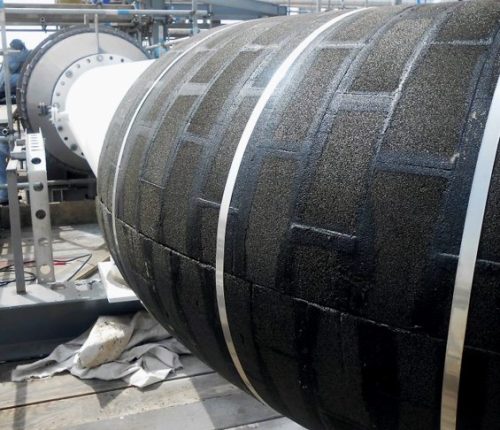
At cryogenic temperatures, conventional insulation fails. Mineral wool absorbs moisture from the air and freezes, expanding and degrading the system. Conventional adhesives lose their bond. The pipework or vessel contracts, and the insulation system must accommodate dimensional movement that does not exist at ambient or elevated temperatures.
Cryogenic insulation systems are designed around the specific operating temperature range, the rate of temperature cycling, and the acceptable heat gain rate for the application. The material selection — typically cellular glass, polyurethane foam, or multi-layer aerogel systems — is driven by the temperature range, vapour barrier requirements, and whether the system handles thermal cycling or remains at steady-state cryogenic conditions.
Vapour barrier integrity is the dominant concern at cryogenic temperatures. Any moisture ingress freezes, expands, and destroys the insulation system over time. Fenix specifies and installs cryogenic insulation systems with properly designed vapour barriers and ties all work back to the relevant BS standard.
What We Cover
- LNG and liquefied gas pipework and equipment insulation
- Industrial gas storage and transfer — liquid nitrogen, liquid CO₂
- Cold chain and food processing — ultra-low temperature plant
- Cryogenic vessel and tank insulation
- Insulation systems down to -170°C
- Thermal cycling systems and steady-state cryogenic plant
- Vapour barrier design and installation
FAQs
What is cryogenic insulation?
Cryogenic insulation is applied to equipment, pipework, or vessels operating at very low temperatures — typically below -100°C — where conventional insulation materials and installation methods cannot perform adequately. The primary design objective is to minimise heat gain into the cryogenic system, preventing excessive boil-off and maintaining the required process or storage temperature. Vapour barrier integrity is equally critical — moisture ingress at cryogenic temperatures freezes and destroys the insulation system.
What temperature range does Fenix cover for cryogenic insulation?
Fenix installs cryogenic insulation systems for plant operating down to -170°C. This covers LNG storage and transfer, industrial liquefied gas applications including liquid nitrogen and liquid CO₂, and food industry ultra-low temperature processing and storage equipment. Below -170°C, the requirements move into a different engineering category that sits outside our current scope.
What materials are used in cryogenic insulation?
Material selection for cryogenic insulation depends on the operating temperature range, the heat gain limit, and whether the system will experience thermal cycling or remain at steady-state cryogenic conditions. We work with cellular glass (which is rigid and vapour-impermeable), polyurethane foam systems, and aerogel blanket systems for applications where thin-profile high-performance insulation is required. The material is always specified against the temperature range and application before installation.
Why is vapour barrier installation critical for cryogenic systems?
At cryogenic temperatures, moisture in the ambient air will condense and freeze if it contacts the cold surface inside the insulation. Once ice forms within the insulation it expands, disrupts the insulation structure, and creates pathways for further moisture ingress. The vapour barrier prevents this — it must be continuous, properly sealed at all joints and penetrations, and installed without damage. Fenix treats vapour barrier installation as a critical hold point and carries out an inspection before covering it with insulation.
What documentation does Fenix provide for cryogenic insulation?
We provide a written insulation specification detailing material selection, thickness, vapour barrier type and installation method, and the heat gain calculation for the installed system. Material certificates for all insulation and vapour barrier materials are included in the handover pack. Where the installation is on a gas or process system subject to third-party inspection, we can coordinate inspection hold points with the client’s inspection authority.
Gallery
Right first time, far below zero